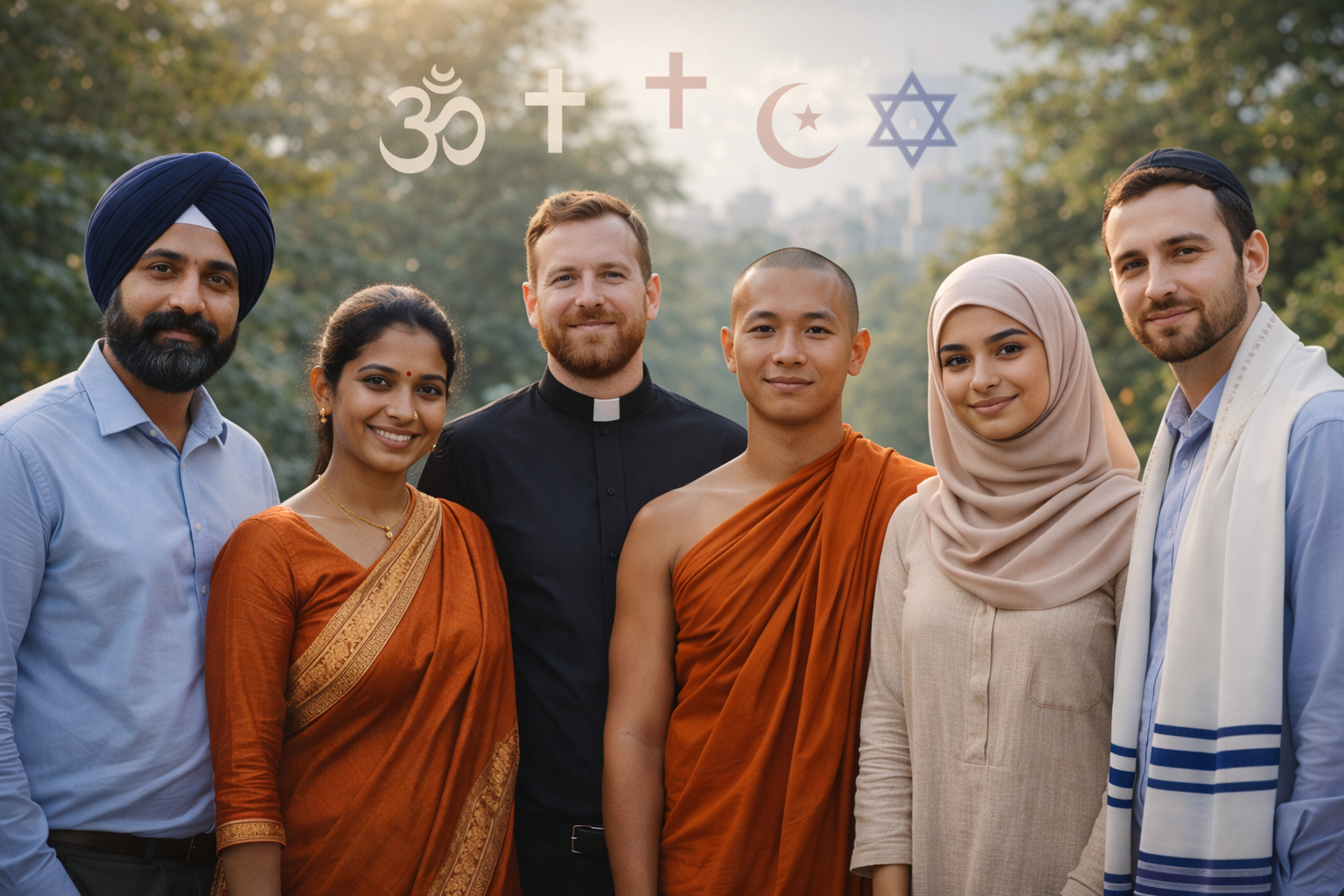

In an era marked by rapid change, cultural diversity, and global interconnectedness, religion continues to shape identities, ethics, and community life. World Religion Day, observed every year in January (third Sunday) and falling on 18 January in many calendars, is dedicated to fostering interfaith understanding, mutual respect, and peaceful coexistence among people of all faiths and beliefs. Rather than promoting any single religion, the day emphasizes a universal truth: despite differences in rituals and traditions, religions share common moral foundations centered on compassion, justice, and service to humanity.
World Religion Day invites societies to move beyond stereotypes and divisions, encouraging dialogue over discord and cooperation over conflict. In a world facing polarization, the observance underscores that faith can be a bridge—not a barrier—when approached with openness and humility.
Why World Religion Day is Observed (Origins, Purpose, and Global Meaning)
World Religion Day was established to highlight the idea that all major religions have contributed positively to civilization and that understanding among faiths is essential for lasting peace. The observance emerged from the recognition that ignorance about other beliefs often fuels mistrust, prejudice, and conflict. By creating a dedicated day for learning and dialogue, World Religion Day seeks to replace fear with knowledge and division with empathy.
The purpose of the day is educational and ethical. It encourages individuals to study the core teachings of different religions—not to compare superiority, but to discover shared values such as kindness, honesty, humility, and service. Across the world, communities mark the day through interfaith discussions, seminars, cultural exchanges, and acts of service that reflect shared moral commitments.
In modern society, where migration and globalization have brought diverse faiths into closer contact than ever before, interreligious literacy has become a civic necessity. World Religion Day addresses this need by promoting respectful conversation and rejecting the misuse of religion for political or violent ends. It reminds the global community that peace is not achieved by erasing differences, but by understanding and honoring them.
Shared Values Across Religions: An A–Z Perspective
Although religious traditions differ in theology and practice, their ethical teachings often converge. From A for altruism to Z for zeal in service, religions across the world emphasize moral principles that sustain social harmony. Compassion for the vulnerable, respect for life, truthfulness, and responsibility toward others are recurring themes found in sacred texts and traditions worldwide.
World Religion Day highlights these shared values to counter the narrative that religions are inherently divisive. Instead, it demonstrates that faith traditions have historically guided societies toward moral reflection, community cohesion, and social responsibility. Whether expressed through charity, meditation, prayer, or ethical conduct, the underlying message remains consistent: human dignity is universal.
This A–Z understanding also helps younger generations navigate diversity with confidence. When people recognize common ethical ground, differences become opportunities for learning rather than sources of fear. World Religion Day thus promotes a values-based approach to coexistence, where diversity is respected without compromising individual beliefs.
Interfaith Dialogue in the Modern World: Challenges and Opportunities
The contemporary world presents both challenges and opportunities for interfaith relations. On one hand, misinformation, extremism, and identity politics have intensified religious tensions in some regions. On the other, digital communication and global networks have made dialogue more accessible than ever before.
World Religion Day emphasizes dialogue as a practical tool for peacebuilding. Interfaith dialogue does not require agreement on doctrine; it requires willingness to listen and learn. When religious leaders, educators, and citizens engage in honest conversation, they build trust and reduce the likelihood of conflict.
Educational institutions, civil society organizations, and international bodies increasingly recognize interfaith cooperation as essential to social stability. By addressing shared concerns—such as poverty, climate change, and social injustice—faith communities can collaborate on solutions that transcend doctrinal boundaries. World Religion Day serves as an annual reminder that cooperation rooted in shared humanity is stronger than division rooted in misunderstanding.
The Role of Youth, Education, and Media in Promoting Religious Harmony
Young people play a decisive role in shaping the future of interfaith relations. Education systems that teach religious literacy—without bias or proselytization—equip students with the tools to understand diversity thoughtfully. World Religion Day underscores the importance of inclusive curricula that present religions accurately and respectfully.
Media also carries responsibility. Balanced reporting and thoughtful storytelling can counter stereotypes and amplify examples of peaceful coexistence. When media highlights cooperation rather than conflict, it reinforces the core message of World Religion Day: religious diversity is a strength, not a threat.
Youth-led interfaith initiatives, volunteer programs, and cultural exchanges demonstrate how shared service can dissolve barriers. These efforts show that harmony is not an abstract ideal but a lived experience built through everyday actions.
World Religion Day in Today’s Global Context
In a time of global crises—from humanitarian emergencies to environmental challenges—World Religion Day feels especially relevant. Faith communities often provide frontline support during disasters, offering shelter, aid, and hope. Their moral influence can mobilize collective action where political systems struggle.
The observance encourages societies to view religion as a partner in progress, capable of inspiring ethical leadership and social responsibility. It challenges individuals to examine how their beliefs shape their attitudes toward others and to choose empathy over exclusion.
World Religion Day ultimately asks a simple yet profound question: Can humanity learn to celebrate difference without fear? The answer lies in continued dialogue, education, and shared commitment to peace.
Conclusion: Faith as a Pathway to Peaceful Coexistence
World Religion Day (18 January) affirms that understanding among religions is not optional—it is essential for a peaceful world. By focusing on shared values, respectful dialogue, and cooperative action, the day offers a hopeful vision of coexistence rooted in dignity and compassion. In honoring diversity, humanity moves closer to unity.
Frequently Asked Questions (FAQs)
Q1. When is World Religion Day observed?
It is observed annually in January, on the third Sunday, which often falls around 18 January.
Q2. What is the main purpose of World Religion Day?
To promote interfaith understanding, respect, and peaceful coexistence.
Q3. Does World Religion Day promote any single religion?
No. It emphasizes shared values across all religions without favoring any one belief.
Q4. How can individuals observe World Religion Day?
By learning about other faiths, participating in dialogue, and engaging in acts of service.