
👁️ World Braille Day (4 January): History, Importance, Accessibility, and Why Braille Is a Human Right
World Braille Day is observed on 4 January to promote accessibility, inclusion, and the importance of Braille for visually impaired people worldwide.
🌍 What is World Braille Day and Why is it Observed on 4 January?
World Braille Day is observed every year on 4 January to raise awareness about the importance of Braille as a means of communication, education, and independence for visually impaired and blind individuals. The day emphasizes that accessibility is not charity but a basic human right that enables equality, dignity, and participation in society.
Braille allows visually impaired people to read, write, learn, work, and live independently. Without accessible formats like Braille, millions of people remain excluded from education, employment, and information. World Braille Day reminds governments, institutions, and societies to remove these barriers.
Supportive Points:
- Observed globally on 4 January
- Promotes accessibility as a right
- Focuses on inclusion and equality
📜 History of World Braille Day

World Braille Day is celebrated on the birth anniversary of , who was born on 4 January 1809 in France. After losing his eyesight at a young age due to an accident, Louis Braille dedicated his life to developing a reading and writing system for blind people.
At just 15 years old, he invented the Braille system, based on raised dots arranged in patterns that could be read by touch. Despite initial resistance, Braille gradually gained acceptance and became the global standard for tactile reading.
In 2018, the officially recognized World Braille Day to reinforce the importance of accessible communication for persons with disabilities.
Supportive Points:
- Honors the legacy of Louis Braille
- Recognized by the United Nations
- Marks a milestone in disability rights
📘 What Is Braille and How Does It Work?

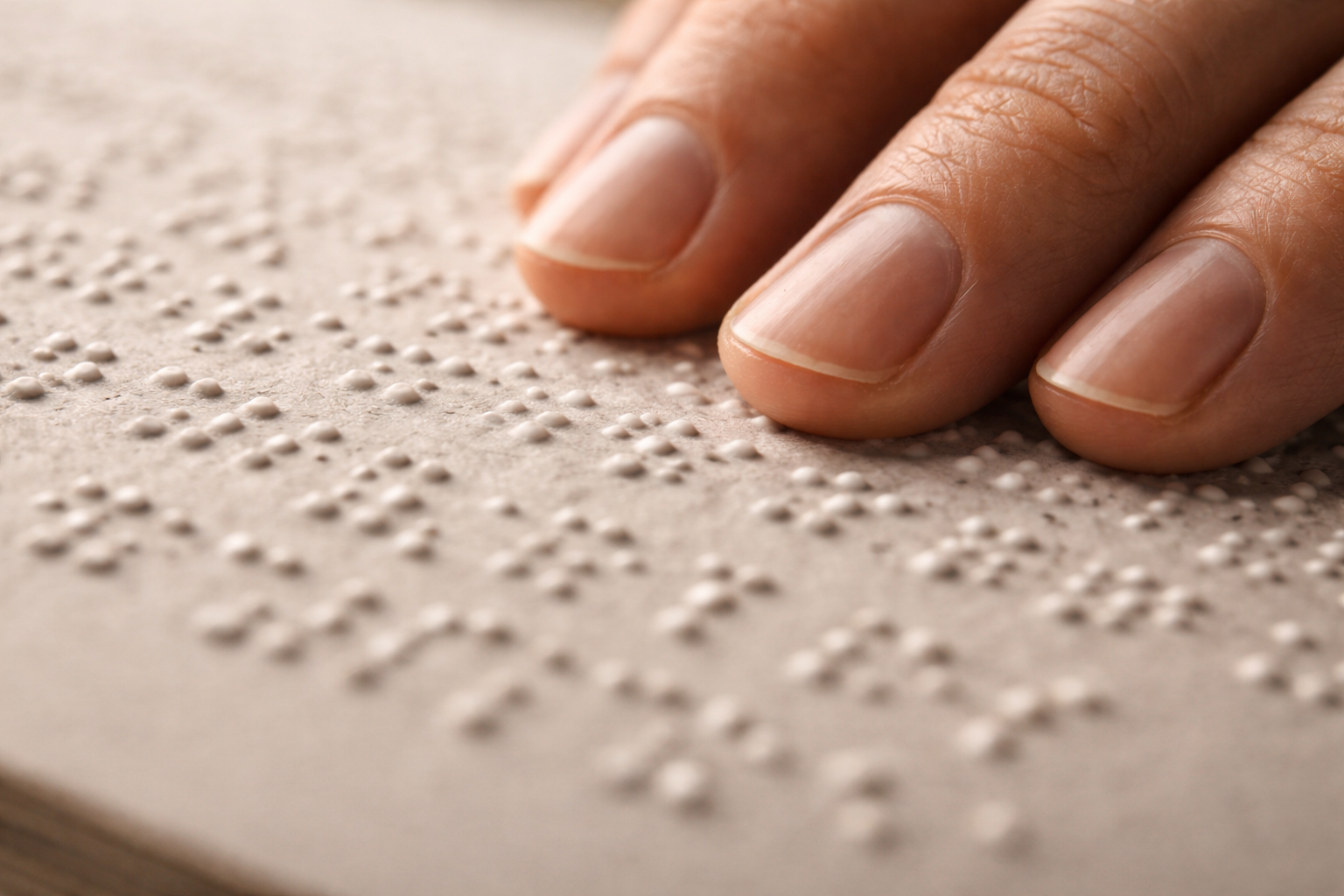
Braille is a tactile writing system that uses six raised dots arranged in different combinations to represent letters, numbers, punctuation, and symbols. These dots are read by gently moving fingers across the surface, allowing blind individuals to interpret text through touch.
Unlike audio tools, Braille enables true literacy, as it teaches spelling, grammar, mathematics, and formatting. It empowers individuals to take notes, read textbooks, understand scientific equations, and engage with written language independently.
Supportive Points:
- Six-dot tactile system
- Enables true literacy, not just listening
- Used for education, science, and daily life
🧠 Why Braille Is Essential for Education and Employment

Braille plays a crucial role in ensuring equal access to education and employment for visually impaired individuals. Students who learn Braille perform better academically and develop stronger language and cognitive skills compared to those relying only on audio learning.
In the workplace, Braille allows professionals to label equipment, read documents, manage finances, and work independently. Without Braille, visually impaired people face systemic disadvantages that limit economic participation and self-reliance.
Supportive Points:
- Improves academic performance
- Supports professional independence
- Reduces dependency and exclusion
🌐 World Braille Day and Global Disability Rights

World Braille Day aligns with global efforts to promote disability rights, inclusion, and equal opportunity. It supports international frameworks such as the UN Convention on the Rights of Persons with Disabilities, which emphasizes accessible information and communication.
The day encourages governments to adopt Braille in public signage, currency, education systems, and digital platforms. Accessibility benefits not only the visually impaired but also creates a more inclusive and empathetic society.
Supportive Points:
- Supports global disability rights
- Encourages inclusive policies
- Builds equitable societies
🌟 Why World Braille Day Still Matters Today

In the digital age, accessibility gaps still exist. Many websites, apps, and public services remain inaccessible to visually impaired users. World Braille Day serves as a reminder that technology must evolve inclusively, integrating Braille displays, screen readers, and accessible design.
The day is not just about awareness—it is about action, policy change, and social responsibility. A world that values Braille values equality.
Supportive Points:
- Highlights digital accessibility gaps
- Promotes inclusive technology
- Reinforces dignity and independence
🔗 Internal Links
🌍 External Links
❓ FAQs – World Braille Day
Q1. Why is World Braille Day celebrated on 4 January?
Because it marks the birth anniversary of Louis Braille, the inventor of the Braille system.
Q2. Is Braille still relevant in the digital age?
Yes. Braille ensures literacy, accuracy, and independence beyond audio-based tools.
Q3. Who benefits from Braille?
Blind and visually impaired individuals across education, employment, and daily life.
Q4. What is the goal of World Braille Day?
To promote accessibility, inclusion, and equal rights for visually impaired people.