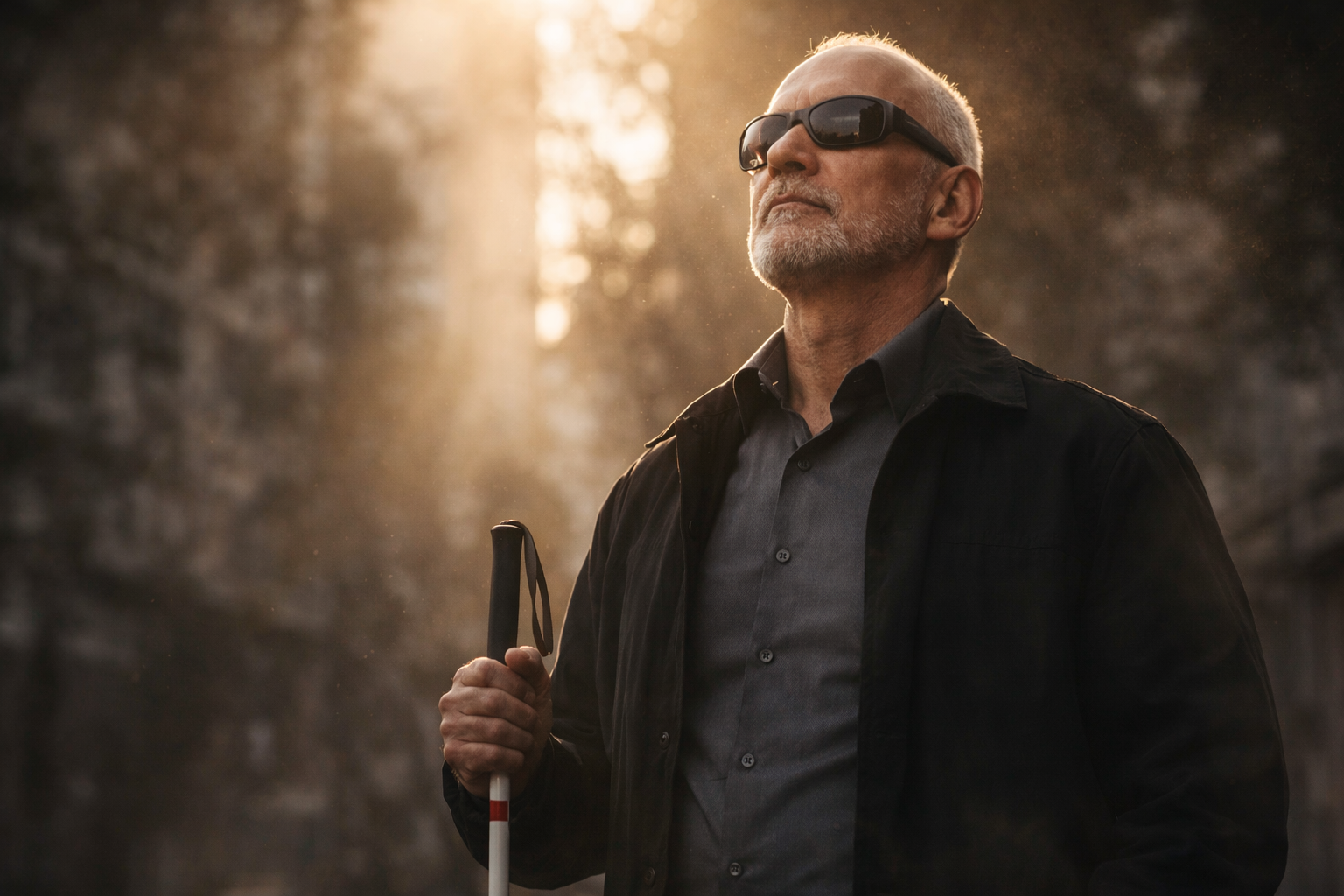
A deep inspiring life story that redefined success and multi-part journey of blind achievers in India and across the world—IAS officers, athletes, entrepreneurs, artists, and leaders who proved vision goes beyond eyesight.

🌟Blind Achiever’s Multi-Part Inspirational Journey of Courage, Intelligence, and Leadership
🌍 Introduction: When Vision is Stronger Than Sight
Blindness is often misunderstood as darkness, limitation, or dependence. Yet history repeatedly proves that some of the brightest minds and strongest leaders walked the world without physical sight. Blind achievers challenge society’s shallow definition of ability and redefine success through intellect, discipline, creativity, and resilience.
This article is not a list—it is a journey. A multi-part inspirational series within one blog that explores how blind individuals across India and the world rose as administrators, athletes, entrepreneurs, artists, and reformers. Their stories are not miracles; they are outcomes of access + determination + opportunity.
Key reflections:
- Blindness does not block ambition
- Opportunity unlocks excellence
- Inclusion transforms societies
📘 PART 1: GLOBAL BLIND ACHIEVERS – WHEN THE WORLD LEARNED A NEW DEFINITION OF ABILITY
🌐 Helen Keller: The Voice That Spoke for Millions

Helen Keller lost both sight and hearing in early childhood, yet became one of the most influential authors and disability rights advocates in global history. Through education and perseverance, she graduated from university, authored books, and traveled worldwide advocating inclusion.
Her life proves that communication is not limited to senses—it is expanded by intellect.
Why her journey matters:
- Education empowers even in extreme disability
- Advocacy creates systemic change
- One voice can represent millions
🎶 Stevie Wonder & Ray Charles: When Music Became Sight

Stevie Wonder and Ray Charles transformed global music despite lifelong blindness. Their creativity redefined sound, emotion, and cultural expression. They didn’t adapt to music—they reshaped it.
Their achievements prove that art is not visual; it is emotional intelligence.
Lessons from music legends:
- Creativity is independent of vision
- Disability does not limit innovation
- Talent flourishes when nurtured
🇮🇳 PART 2: INDIAN BLIND ACHIEVERS – REDEFINING LEADERSHIP AND POSSIBILITY
🏛️ Pranjal Patil: India’s First Visually Impaired Woman IAS Officer

Pranjal Patil shattered one of India’s strongest myths—that civil services demand physical perfection. Losing her eyesight early, she cleared UPSC and entered the IAS, serving with competence and empathy.
Her presence in administration is not symbolic—it is transformational.
What her success teaches India:
- Governance must be inclusive
- Disability and leadership coexist
- Representation changes policy mindset
🏏 Shekhar Naik: Blind Cricket and the Spirit of Competition

Shekhar Naik, former captain of India’s Blind Cricket Team, led India to international victories. Blind cricket requires extraordinary spatial awareness, teamwork, and discipline.
His career proves that sports are about instinct, not eyesight.
Why blind sports matter:
- Sports build confidence and leadership
- Disability sports deserve equal recognition
- Inclusion inspires future generations
🏢 Srikanth Bolla: Inclusive Business as a New Economic Model

Blind since birth, Srikanth Bolla founded Bollant Industries, employing people with disabilities and producing sustainable products. He is also the first blind international student at MIT Sloan.
His story merges business, ethics, and inclusion.
Key takeaways:
- Disability-inclusive businesses are profitable
- Employment restores dignity
- Capitalism can be compassionate
🎓 Surdas: Blindness and Spiritual Genius

Centuries before modern accessibility debates, Surdas—a blind poet—composed devotional literature that still shapes Indian culture. His blindness never limited his insight; instead, it deepened it.
Why his legacy endures:
- Vision comes from wisdom
- Art transcends physical ability
- Culture preserves inclusive history
🌱 PART 3: WHAT THESE STORIES TEACH SOCIETY

Blind achievers teach a powerful truth:
Disability is not inability—lack of access is.
Education, Braille, assistive technology, inclusive policy, and social acceptance convert potential into achievement. When systems include, individuals excel—and society progresses.
Collective lessons:
- Accessibility is an investment
- Inclusion strengthens institutions
- Diversity drives innovation
🌟 Conclusion: Vision is a Human Quality, Not a Physical One
This multi-part journey of blind achievers reveals a timeless truth:
The greatest limitations are not physical—they are societal.
When blind individuals are given education, respect, and opportunity, they do not just succeed—they lead, inspire, and transform the world.
Their stories are not exceptions.
They are evidence.
❓ FAQs – Blind Achievers Series
Q1. Can blind people become IAS officers or professionals?
Yes. With accessibility and equal opportunity, blind individuals excel in administration, law, business, and academia.
Q2. Why are blind achievers important role models?
They challenge stereotypes and prove that success depends on access and mindset, not eyesight.
Q3. How can society support blind achievers?
By ensuring accessible education, inclusive workplaces, assistive technology, and respectful representation.
Q4. Is this blog suitable for students and youth?
Absolutely. It is designed to inspire students, educators, policymakers, and families alike.